A Legacy of Faith
The story of First Chinese Church was shaped by generations of faithful individuals whose lives, ministries, and service helped establish a lasting Christian presence within Hawai‘i’s Chinese community.
Historical Highlights
1871
Chinese Sunday School Begins
One of the earliest organized ministries for Chinese immigrants in Honolulu takes shape.
1879
The Church is Founded
The Chinese Christian Church of Honolulu is formally organized and receives its royal charter from King Kalākaua.
1881
Fort Street Church Is Dedicated
The congregation establishes a permanent home that becomes a center for Chinese Christian ministry.
1883
Mission Work Expands
The church begins establishing mission stations beyond Honolulu and across the islands.
1892
A Commitment to Education
The church founds Mills Institute and helps establish Hawai‘i’s first kindergarten-preschool.
1897
Chinese Hospital Is Established
The church helps provide medical care for Hawai‘i’s Chinese community through the Chinese Hospital.
1928
A New Home on King Street
The congregation establishes its present-day home on King Street and continues its ministry under the name The First Chinese Church of Christ in Hawai‘i.
Our Story
From humble beginnings among Chinese immigrants in Hawai‘i to a congregation with a lasting legacy of worship, education, service, and outreach, the story of First Chinese Church spans more than a century.
The Beginning: Samuel P. Aheong
Our story begins in the bustling region of Guangdong, known historically as Canton, in Southern China. Here, a young teenager named Siu Aheong was navigating the turbulence of mid-19th century China. He would later become known across the Hawaiian Islands as Samuel P. Aheong—a man whose life would be a testament to both God’s providence and the transformative power of the gospel.
During the 1850s and 1860s, Southern China was engulfed in the chaos of the Taiping Rebellion and the Punti-Hakka Clan Wars, leaving the land ravaged and its people in despair. Thousands fled this devastation, seeking refuge and a new beginning. At the same time, Hawaii’s nascent sugar industry was flourishing, and recruiters enticed Chinese laborers with the promise of work and opportunity. It was amidst this turmoil that Siu Aheong, the well-educated son of a school superintendent, found himself separated from his family. In 1854, lured by the promise of meaningful work and desperate for a fresh start, he signed a contract and boarded a ship bound for Hawaii.
However, upon his arrival, Aheong realized he had been deceived. The promised position of responsibility turned out to be a harsh reality: grueling labor as a “coolie” on the Torbert Plantation at Ulupalakua, Maui. Yet even in this hardship, God’s hand was at work. One day, Aheong caught the attention of the plantation owner, L.L. Torbert, who was impressed by the young man’s intelligence. Torbert removed him from field labor and entrusted him with managing the plantation store—a significant turning point in Aheong’s life. It was during this time that he adopted the name Samuel Aheong, signaling the beginning of a new chapter.


When Torbert relocated to Makawao, he brought Aheong with him. Here, Aheong’s life intersected with that of Jonathan Smith Green, a missionary who was teaching English lessons in his home. Aheong, already fluent in numerous Chinese dialects, eagerly joined the class. He quickly mastered English, Hawaiian, and even Japanese. Yet, it wasn’t just language skills that Aheong gained; it was during these lessons that he first encountered the message of the Christian gospel. Captivated by its truth, he became a Christian—a decision that would shape the rest of his life.
By 1859, recognizing Aheong’s capabilities, Torbert released him from his five-year contract ahead of schedule. Aheong then established himself as a merchant in Lahaina, marrying Naukana Hikiau, a Hawaiian woman. He became an active member of the Waine’e Church, now known as Wai’ola Church, under the guidance of the Reverend Dr. Dwight Baldwin. It was here that Aheong’s passion for sharing the gospel began to flourish. He longed to reach his fellow Chinese immigrants, many of whom were isolated and spiritually adrift.
In August 1868, Aheong attended the annual conference of the Hawaiian Evangelical Association in Honolulu. They had been searching for years for someone to minister to the growing Chinese population in Hawaii. Inspired by Aheong’s zeal, Reverend C.B. Andrews recommended him as a candidate for this critical role. Aheong accepted the commission as a full-time evangelist and colporteur, closing his business in Lahaina to dedicate himself entirely to this new calling.

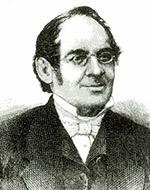
What followed was a remarkable season of ministry. Aheong traveled extensively across Maui, Kauai, the Big Island, and Oahu, preaching to Chinese laborers and distributing Bibles. His efforts bore fruit as Chinese immigrants began attending local Hawaiian churches and Sunday schools, eager to learn more about the Christian faith. Demand for Chinese-language Bibles surged, a testament to the impact of his work.
In 1869, with the support of Reverend Dr. Samuel Chenery Damon of the Seamen’s Friend Bethel Chapel and Bethel Union Church, Aheong started hosting Sabbath evening meetings for the Chinese community. He began with an English language school, meeting three nights a week at Bethel Union Church. What started with just twenty pupils soon grew to regular gatherings of sixty to one hundred Chinese attendees—evidence of a deep spiritual hunger among the immigrants.
Aheong’s story, however, did not end in Hawaii. In 1870, as peace returned to Southern China following the end of the Taiping Rebellion and the Punti-Hakka Clan Wars, he felt compelled to return to his homeland to share the gospel there. He embarked on this new mission with plans to eventually come back to his adopted home in Hawaii. Yet, he would not have the chance to return. Samuel Aheong passed away in China the following year.
Though his earthly journey was cut short, Samuel Aheong’s legacy lived on. His ministry sparked a movement, inspiring the Christian community in Hawaii to continue reaching out to the Chinese immigrants with renewed vigor and compassion. Aheong’s life reminds us that the seeds of the gospel, once sown, can bear fruit far beyond our own lifetimes, spreading hope and light where it is most needed.


The Beginnings of the YMCA and Ministry to Chinese Immigrants
The story of Samuel Aheong’s life did not end with his passing. Deeply inspired by Aheong’s passion for reaching the Chinese immigrants with the gospel, Peter Cushman, Thomas Rain Walker, and Sanford Ballard Dole took action.
A year prior to Aheong’s death, these three men had already laid the foundations for Hawaii’s first YMCA. In those early days, the YMCA was focused squarely on evangelism. Their activities included Bible classes, prayer meetings, street corner services, noonday meetings at factories, and revival gatherings. Understanding the social challenges of the time, they established a Reading Room strategically located between the bustling wharf and the rowdy saloons of Honolulu. Their hope was simple yet profound: to provide a safe, wholesome space where sailors could read Christian literature instead of succumbing to the other temptations that abounded at that time. This humble Reading Room would eventually evolve into the Hawaii State Public Library.
After hearing of Samuel Aheong’s death and witnessing the increasing number of Chinese immigrants arriving to work on the plantations, Sanford Dole proposed that a YMCA committee be formed to explore how best to minister to the Chinese workers who were pouring into the islands, often isolated and far from home.
In December of 1871, this vision took a concrete step forward. The YMCA, in collaboration with the Fort Street Church (then known as the Second Foreign Church, which later merged with Bethel Union Church to form the present-day Central Union Church), launched a Chinese Sunday School. Held every Sunday afternoon at “three and a half o’clock,” this small beginning saw an initial group of 16-19 students, but soon grew to over 50 participants.
Recognizing the need for a dedicated Chinese evangelist, the YMCA resolved to hire a preacher affectionately referred to as “Peter.” Yet finding the right person for this pivotal role proved challenging. For over two years, they searched for someone who could effectively bridge the cultural and linguistic divide. Finally, A.W. Loomis, a respected figure in the Presbyterian Mission field, recommended Sit Moon. He described Moon as “the best Chinese Evangelist in California,” a man with fifteen years of experience ministering in San Francisco. With this choice, the YMCA’s outreach to the Chinese community gained new momentum.


The Ministry of Sit Moon and the Birth of the Chinese Christian Association
Hired in 1875, Sit Moon traveled tirelessly across Oahu and the neighboring islands, sharing the gospel and distributing religious tracts. His work marked a significant new chapter in outreach to the Chinese immigrants.
Under Sit Moon’s dynamic leadership and the encouragement of Joseph Ballard Atherton, a respected businessman and advocate for Christian missions, the YMCA expanded its efforts. They organized classes that addressed both the practical needs and the spiritual hunger of the Chinese people. Through these classes, they taught Chinese laborers English while also introducing them to foundational Biblical truths.


The Arrival of Goo Kim Fui and the Basel Hakka Christians
Around this time, Goo Kim Fui, a Hakka Christian and a successful businessman from Southern China, arrived in Hawaii. Goo was also the Chinese Vice-Consul, and he brought with him not only his commercial acumen but also a deep Christian faith. In 1876, a group of 28 professing Hakka Christians, including five women, followed him to Honolulu. These believers were the spiritual fruit of the Basel Mission, a Protestant movement in China known for its commitment to evangelism and church planting. This mission effort, carried out by the Basel-Hakka, Barmen, and Berlin Missionary societies, had grown rapidly, from 20 members in 1844 to over 1,100 missionaries in just four years—a testament to the power of the gospel in Southern China.
Upon their arrival in Hawaii, the Hakka Christians quickly connected with Sit Moon, who was already deeply involved in ministering to the Chinese community. Sit Moon recognized their strong faith and led a group of 19 to seek assistance from Pastor Samuel Damon of the Seamen’s Bethel Chapel. Pastor Damon, a longtime supporter of immigrant outreach, graciously offered the chapel facilities for Sunday afternoon services. However, despite his deep care for the Chinese community, Pastor Damon’s inability to speak or understand Chinese meant that the services were conducted entirely in English—a barrier for many who could not comprehend the sermons.
The Founding of the Chinese Christian Association
Seeing the need for a ministry in the Chinese language, Sit Moon took the initiative once again. In 1877, he gathered a group of eight Chinese Christians, including Goo Kim Fui, to establish a new mission focused on reaching their fellow Chinese immigrants in their own language. This effort led to the formation of the You Hawk Jihu Taw Hui, now known as the Chinese Christian Association—a pioneering move that provided a space for Chinese believers to worship and study the Bible in their heart language.
It was during this time that an idea was sparked for a more permanent Chinese Gospel church in Honolulu. Yee Huang, a visitor from San Francisco, asked Goo Kim Fui why there wasn’t yet a church where Chinese immigrants could gather to hear the Word of God in their own language. Goo Kim Fui, though enthusiastic, expressed his concerns. He replied that founding such a church would require significant preparation and financial resources—resources that he did not have at his disposal.


The Partnership of Goo Kim Fui and John T. Waterhouse
Shortly after this conversation, John T. Waterhouse, a prominent English businessman and philanthropist, visited Goo at his store. Sensing an opportunity, Goo shared his vision for a Chinese Gospel church and sought Waterhouse’s counsel. Waterhouse listened carefully and responded thoughtfully: “This is an important matter that must not be rushed. If we act hastily, we risk failure.” Yet, Waterhouse also saw the hand of God in this endeavor, affirming, “This is not merely your idea, but the will of our Heavenly Father.” He promised to do everything in his power to help bring this vision to life.
True to his word, Waterhouse returned to the store just an hour later with a generous donation of $500—a substantial gift that would amount to over $8,000 today. This act of faith and generosity became the seed money for the formation of the Chinese Gospel church, a testament to the power of God’s provision and the collaboration between diverse believers united by a shared mission.
The Founding of Fook Yim Tong: The Chinese Christian Church of Honolulu
The Fook Yim Tong, or Gospel Church, began its humble gatherings at the Bethel Chapel, under the leadership of Sit Moon. By May of 1879, John T. Waterhouse, recognizing the growing needs of this new congregation, made available the old Lyceum—a town hall located on the corner of Kukui and Nuuanu Streets. On May 21, 1879, the Fook Yim Tong held its first service at this new location.


A New Beginning: Forming a Church in Their Own Language
Just a few weeks later, on June 8, 1879, 39 Chinese Christians, citing their inability to fully understand the English services, petitioned the Hawaiian Evangelical Association to allow them to establish a church where worship could be conducted in their own language. An Ecclesiastical Council, meeting at the Lyceum, granted this request, officially forming the Chinese Christian Church of Honolulu. Goo Kim Fui, a respected leader, was elected as the board chairman. Sit Moon was appointed as pastor, and Samuel Damon agreed to serve as moderator—a collaboration that brought together Hawaiian and Chinese believers in a shared mission.
On October 3, 1879, the church received its official charter of incorporation from His Majesty, King Kalakaua. Although the original document was tragically lost in a fire 50 years later, two copies remain: one preserved in the minutes of the church’s first Board of Trustees and another held in the Hawai’i State Archives.
The Life of Dr. Sun Yat Sen
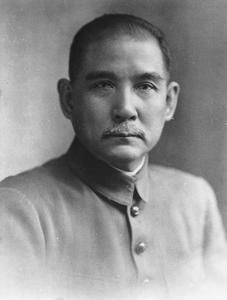
One of the most notable attendees of the Chinese Christian Church was a young man named Sun Yat Sen, known in Chinese as 孫逸仙 (Sun Yat Sen) and 孫中山 (Sun Zhongshan). It was there, at the Lyceum, that Sun embraced the Christian faith. Soon after, he sought permission from his guardian—his elder brother residing in Maui—to be baptized. His brother, however, disapproved and sent him back to China. Yet, Sun’s newfound faith would not be shaken. Back in Xiangshan (香山), or Fragrant Mountain, he found a Christian community where he was baptized. Sun Yat Sen would go on to complete his medical degree and return to Hawaii on several occasions, seeking support from the church. It was this very church that provided financial backing for his revolutionary efforts, which ultimately led to the successful overthrow of the Qing Dynasty and the establishment of a democratic republic in China. In recognition of his legacy, Xiangshan was later renamed Zhongshan (中山) in his honor in 1925.
Building a New Home: The Fort Street Chinese Church
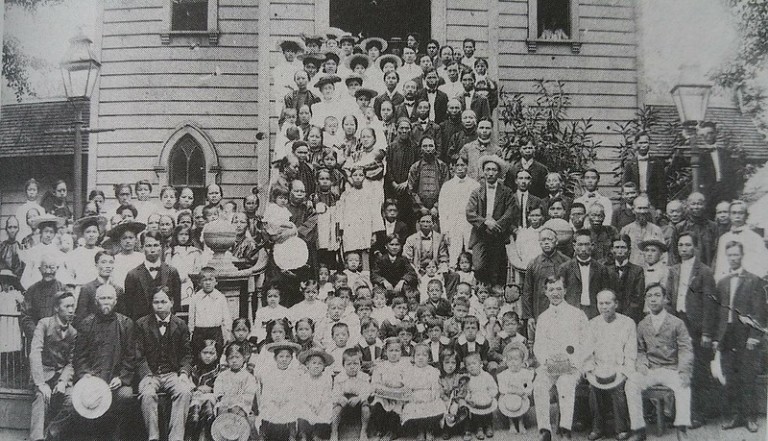
On August 7, 1879, the congregation took a bold step forward, purchasing a lot on Fort Street between Beretania and Kukui Streets for $4,500. By January 2, 1881, the new church building, constructed at a cost of $6,500 with an additional $1,000 for furnishings, was officially dedicated as the Fort Street Chinese Church, also known as the FO GAI FOOK YIM TONG. This church became the focal point for all Chinese mission work in the Hawaiian Islands.
The two-story structure was thoughtfully designed: the first floor served as a parish hall and housed Sunday School classrooms, while the second floor was built as a sanctuary for regular worship services. In December of that same year, the congregation celebrated Christmas with a historic first—the first lighted Christmas tree in a church in Hawaii. The tradition of lighting the tree and singing Christmas carols was introduced by the Chinese Christians, who had learned these customs from the Württemberg missionaries back in China. The carols, sung in Cantonese, carried the melodies of German and Swiss hymns, creating a beautiful blend of cultures.


A Legacy of Service: The Work of Francis Williams Damon
In 1881, Francis Williams Damon, the son of Samuel Damon, was appointed by the Hawaiian Board as the Superintendent of Chinese work. Known affectionately as “Frank,” he would lead the church’s mission to the Chinese community in Hawaii for the next 34 years, guiding it through seasons of growth and challenges.
It was during this time that the church became a refuge during the great fires of 1886 and 1898, when devastating blazes swept through Honolulu’s Chinatown. The church grounds transformed into a temporary shelter for the displaced, offering food, shelter, and comfort to those in desperate need—a living example of Christ’s call to care for those in need.
Educational Endeavors
Under Frank Damon’s leadership, the Mills Institute was founded in 1892 at his home on Chaplain Lane. It started with just five Chinese students and one Japanese student but quickly outgrew its modest beginnings. The school later relocated to Manoa and merged with the Kawaiahao Girls’ Seminary to form what is now the Mid-Pacific Institute, a testament to the church’s ongoing commitment to education and community development.

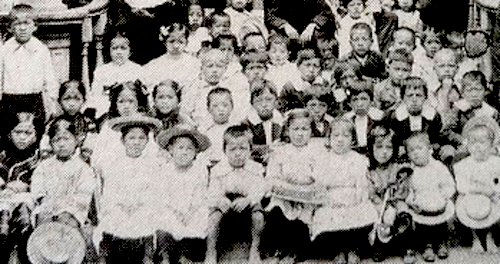
That same year, the church established Hawaii’s first kindergarten-preschool on its grounds. Miss Mildred Kinney, with the help of Hattie Chang, a devoted church member, gathered together 11 children from the congregation and the surrounding neighborhood. The resources were limited—just a handful of wiliwili seeds and bits of chalk—but the spirit of love and service was abundant. Miss Kinney recalled that some of her students had bound feet, requiring their fathers to carry them to and from school—a poignant reminder of the cultural complexities faced by the Chinese immigrants.
Mission Stations and the Expansion of Outreach
As the church grew in strength and vision, it began establishing mission stations, not only across the outer islands of Hawaii but also in the burgeoning neighborhoods of Honolulu itself. These mission outposts reflected a commitment to bring the gospel message to every corner of the islands.
On the Big Island, mission stations were established in Kohala as early as 1883, and later in Hilo in 1901, where today’s United Community Church carries on that legacy. On Maui, the work expanded to Wailuku and Makawao, while on Kauai, the church established thriving centers in Waimea, Hanapepe, and Hanalei—areas known for their bustling rice plantations. In Honolulu, the church operated the Gospel Hall on Hotel Street and the Aala Branch Mission near Aala Park, providing spiritual care and outreach in the heart of the city.


The Chinese Hospital on Robello Lane
In March of 1897, faced with growing anti-Chinese sentiment and the aftermath of the Tientsin Massacre, Goo Kim Fui led the church in forming the Mutual Defense Association (Lein Wei Hui). This initiative aimed to protect and care for the Chinese community, especially when medical help was often denied to them. In response, they built the Chinese Hospital on Robello Lane, known as Wai Wah Yee Yin. By 1917, the hospital had relocated to Palolo and became the Palolo Chinese Home, a facility that continues to serve the elderly in the community to this day.
The Growth of the Beretania Mission and Second Chinese Congregational Church
In 1906, the Beretania Mission was established at 74 North Beretania Street, attracting many Cantonese-speaking Punti Chinese immigrants. By 1915, the mission had flourished, leading to the formation of the first daughter church—the Second Chinese Congregational Church, also known as Yee Jee Wui. The cornerstone for this new church building was laid in 1917, and it was dedicated in June of 1918, with Rev. Tse Kei Yuen serving as the first pastor. In 1948, the church moved to Judd Street and was renamed the United Church of Christ on Judd Street. In 1934, a group of younger members branched off to form the Keeaumoku Church of Christ, now known as the Community Church of Honolulu—forming a vibrant granddaughter church and continuing the legacy of faith.


The Move to King Street: A New Chapter
By 1926, the Fort Street facilities, after nearly half a century of use, were showing signs of wear. The congregation also faced distractions from the new Princess Theatre across the street, and many members had begun moving away from Chinatown. It was time for a new home. The church found a new site at the old Grandville Hotel property on King Street in Makiki. Remarkably, they sold the Fort Street property for $65,000 and purchased the new site for the same amount.
During the year and a half of transition, the church borrowed space from the Chinese YMCA’s meeting hall near the Central Fire Station. Unfortunately, many church records were lost in a fire during this time, a poignant reminder of the fragile nature of physical legacies.
At the new King Street site, the congregation faced a challenge: the existing wooden buildings were inadequate for worship. Determined to create a space that honored both their Christian faith and their Chinese heritage, the members pledged funds for a new sanctuary and parish hall. Architect Hart Wood was chosen to design the sanctuary, blending traditional Chinese architectural elements with Western Christian influences. The congregation decided to add a distinctive pagoda-like bell tower for an additional $5,000, reflecting their cultural pride and self-sufficiency. With this move, the church adopted a new name: The First Chinese Church of Christ in Hawaii.


Master’s Hall and the Legacy of Service
In 1957, a new opportunity emerged during the Christmas season. While practicing a play in the sanctuary, Robert Yee mentioned to the pastor that the old gymnasium at Fort Kamehameha was available for purchase as part of an airport expansion project. After careful consideration, the church bid for the steel structure, which was dismantled, transported, and reassembled on the church grounds. This building became the new parish hall, named Master’s Hall—a space dedicated to God’s glory and the spiritual growth of the congregation.
The Founders’ Hall: Honoring the Legacy
In 1964, the church broke ground for a new building, removing four old wooden structures on the property. Among these, only Damon Hall, constructed in 1928 as a new parish hall, was purpose-built for church use. The others were remnants of the old Grandville Hotel, adapted over time for the church’s needs. The new structure, dedicated in November 1965, was named Founders’ Hall in honor of those who laid the spiritual and physical foundations of the church.
Two key figures, Francis Damon and Goo Kim Fui, were especially remembered for their lifelong dedication. The larger halls within the new building were named after them, serving as a lasting tribute to their vision and tireless service.

A Testimony of God’s Faithfulness
The story of the First Chinese Church of Christ in Hawaii is not ultimately about its buildings, its history, or even its perseverance—it’s about the unchanging, life-giving power of Jesus Christ. Through seasons of hardship, growth, and change, this church has stood as a witness to the gospel’s power, offering the hope and salvation found only in Christ. As we look to the future, we are reminded that Christ is our cornerstone—His gospel is our true foundation, and our mission remains the same: to make His name known and to make disciples, until He comes again.